A Wreck That Could Never Be Found Again
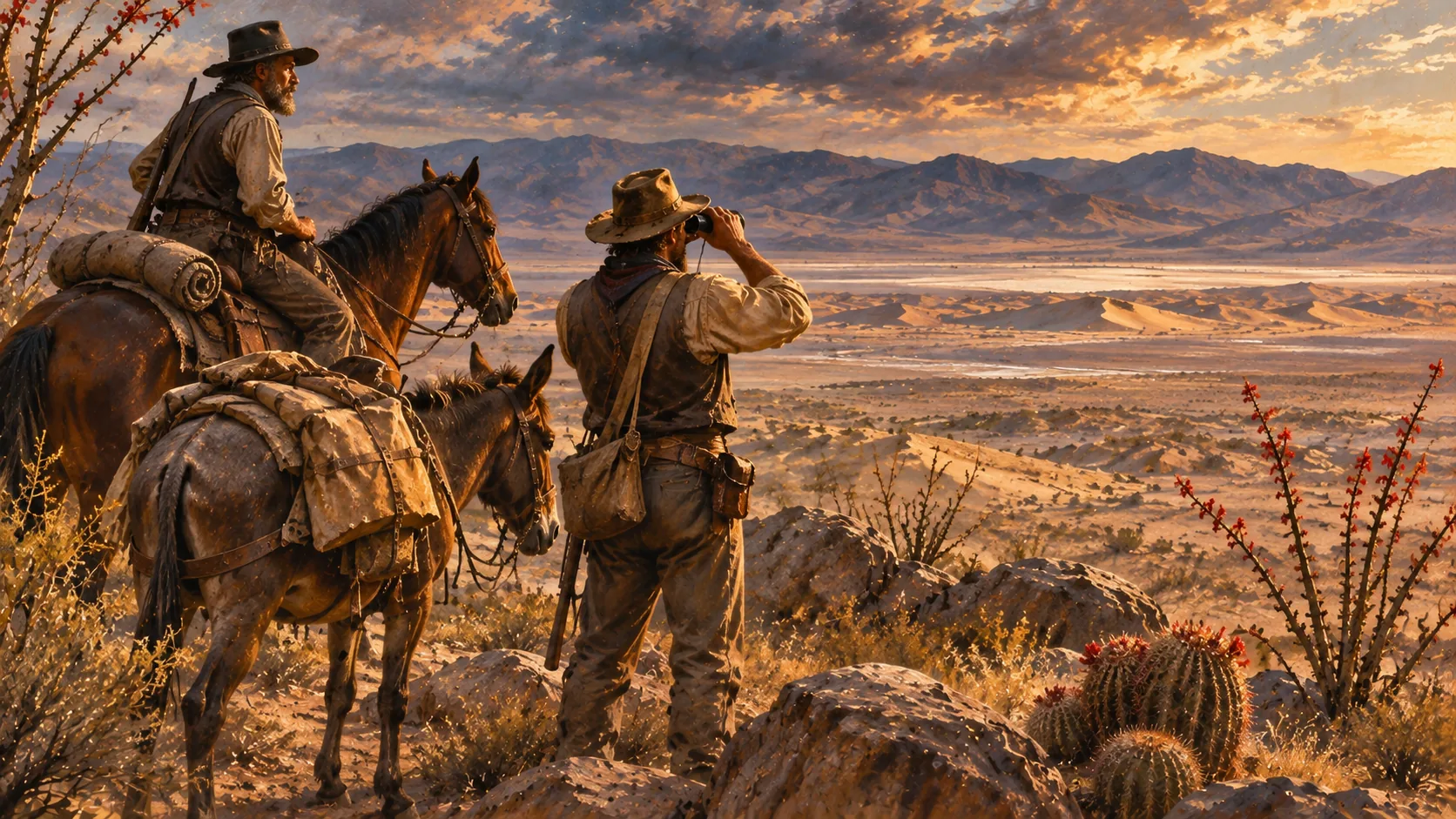
Imagine crossing the Colorado Desert in the nineteenth century, with little more than a horse, a canteen, and a few distant mountains to guide your way.
The sun beats down upon an endless expanse of sand and salt. The landscape shimmers in the heat. And somewhere in the distance, you glimpse something that seems impossible.
The remains of a ship.
Such sightings became part of the growing legend of the Lost Ship of the Desert.
Travelers reportedly encountered weathered timbers, portions of a wooden hull, or the outline of a vessel partly buried in the sand. Yet when they attempted to return, the mysterious wreck could no longer be located.
Some blamed shifting dunes. Others suggested that familiar landmarks had been mistaken or that the vessel had become buried beneath accumulating sand and mud.
Whatever the explanation, the ship remained elusive.
The Search for a Desert Treasure
By 1870, stories of a mysterious vessel were circulating in Southern California, attracting the attention of prospectors and adventurers.
Among the best-known figures associated with the early searches was Charley Clusker, a prospector whose expeditions near Dos Palmas became part of the legend.
Accounts described searches for a stranded vessel that might contain valuable cargo. The possibility of gold, pearls, or other riches offered a powerful incentive to venture into the remote desert.
But the stories surrounding these expeditions were not always reliable.
Historian Harold O. Weight later questioned the motives behind some early searches, suggesting that certain expeditions may have been schemes to obtain financial backing rather than genuine attempts to recover a known wreck.
Whether the searchers were sincere believers, hopeful treasure hunters, or opportunists, their activities helped keep the legend alive.
And still, no authenticated shipwreck emerged.
The Desert Keeps Its Secrets
Finding anything in the Colorado Desert was difficult, especially before modern maps, roads, and navigation equipment.
A distant mountain could appear deceptively close. A familiar stretch of sand might look entirely different when approached from another direction. Wind could reshape dunes, while changing light and atmospheric conditions could alter the appearance of the landscape.
Even an accurately reported location might prove difficult to revisit.
Over time, explanations for the missing vessel multiplied.
Perhaps it had been buried by drifting sand. Perhaps its timbers had been carried away. Some later accounts even suggested that rising waters of the modern Salton Sea had concealed whatever remained.
Others offered simpler possibilities.
Could an abandoned boat have been mistaken for a much older vessel? Could a rock formation or a desert mirage have created the illusion of a distant ship?
Or were several unrelated sightings gradually woven into one extraordinary story?
A Search That Never Quite Ended
The Lost Ship of the Desert continued to attract interest long after the first nineteenth-century reports.
Writers revisited the mystery, treasure hunters proposed new locations, and enthusiasts continued searching the region well into modern times.
Yet the central problem remained unchanged.
Despite generations of stories and expeditions, no conclusively authenticated discovery has established the existence of the legendary Spanish treasure ship.
The accounts themselves, however, tell another fascinating story—one of curiosity, ambition, and the enduring attraction of a mystery just beyond reach.
Following the Trail
The reported sightings raise an important question.
How much of the Lost Ship of the Desert belongs to documented history, and how much comes from speculation, mistaken observations, or generations of storytelling?
To understand the mystery, we must examine what the evidence actually tells us.
Legend or History? →Historical Sources
- Albert S. Evans. “In the Valley of the Shadow.” The Galaxy, Vol. 9, No. 1, January 1870, pp. 89–93. An early published account of an apparent shipwreck observed from a distance.
- Don Laylander. “Early Strangers on the Lower Colorado River and in the California Deserts: The Factual, the Implausible, and the Problematic.” Pacific Coast Archaeological Society Quarterly, Vol. 56, No. 1, 2021, pp. 25–39. Discusses lost-ship sightings, expeditions, and the lack of conclusive physical evidence.
- Harold O. Weight. “Charley Clusker and the Lost Ship.” Desert Magazine, Vol. 40, No. 3, 1977, pp. 32–37. A historical investigation of Clusker's activities, cited by Laylander. The original article remains to be examined during Phase 2.